Federal Office for the Environment FOEN

This version is for browsers with a low level of support for CSS.

Home Language Selection


Home Content Area


Biodiversity conservation is climate protection – and vice versa

Effective climate policy and the global conservation of biodiversity go hand in hand. Ecosystems in natural or near-natural condition act as sinks for large quantities of greenhouse gases. As such, they can mitigate climate change.

Beat Jordi

In lower-lying areas of the Swiss canton of Valais, more and more Scots pine trees have been dying off since the 1990s. Here as elsewhere in Switzerland, these conifers are typically planted in dry, inner-Alpine valleys. They are under pressure primarily from drastic warming of the climate in the Alpine region. Periods of intense heat like the record-breaking summer of 2003 worsen the drought stress even further, leaving the Scots pines in a weakened state - while also favouring their parasites, mistletoe being a prime example. Below about 1000 metres above sea level, coniferous vegetation is increasingly being suppressed by more resistant deciduous trees like the sub-Mediterranean Downy Oak.

In lower-lying areas of the Swiss canton of Valais, more and more Scots pine trees have been dying off since the 1990s. Here as elsewhere in Switzerland, these conifers are typically planted in dry, inner-Alpine valleys. They are under pressure primarily from drastic warming of the climate in the Alpine region. Periods of intense heat like the record-breaking summer of 2003 worsen the drought stress even further, leaving the Scots pines in a weakened state - while also favouring their parasites, mistletoe being a prime example. Below about 1000 metres above sea level, coniferous vegetation is increasingly being suppressed by more resistant deciduous trees like the sub-Mediterranean Downy Oak.

Adaptability has limits. Plants, animals and their habitats have always reacted sensitively to climatic variations like rising temperatures or reduced precipitation. If these changes occur slowly and consistently, many species can adapt to the new conditions - whether by finding alternative territories with more suitable conditions, or by natural selection. However, the speed of human-induced climate change - combined with the sustained pressure of human use on numerous natural landscapes - now risks overloading the adaptive capacity of large numbers of species. If the global average temperature were to rise by 2 to 3°C compared to preindustrial levels, it would increase the risk of extinction of 20 to 30 per cent of plant and higher animal species worldwide, warns a study by the Intergovernmental Panel on Climate Change (IPCC), the United Nations' panel of experts on climate issues.

Preventing dangerous interference. With a view to mitigating the impacts of unavoidable warming as far as possible, the international community agreed the Framework Convention on Climate Change at the 1992 Earth Summit in Rio de Janeiro. This treaty, negotiated at the same time as the Convention on Biological Diversity, aims to stabilise the concentration of greenhouse gases in the atmosphere at a level that prevents dangerous interference with the climate system. "By common consensus, temperature rise should be limited to a maximum of 2°C so that the natural systems our lives depend upon - for food production, economic and social development - are not endangered by the loss of existing ecosystems," explains Xavier Tschumi Canosa from the International Affairs Division at FOEN. "The Convention sets out to achieve this not only by reducing climate-relevant emissions, but also by means of better conservation and promotion of natural sinks which store greenhouse gases."

new window
 Scientists have warned that climate change has the potential to destroy coral reefs on a broad scale. These reefs deliver ecosystem services worth 170 billion US dollars every year, and are the livelihood base for some 500 million people.
© Fisheries and Oceans Canada
Conserving natural sinks. Large volumes of carbon dioxide (CO2), the most significant greenhouse gas, are bound by the plankton in the world’s oceans and by forests, soils and peatlands. Around 80 per cent of the carbon stored in land vegetation is fixed by Earth’s forests. Per year they absorb an estimated 5 billion tonnes of CO2 or around 15 per cent of global man-made carbon emissions. Thus, they play a vital part in mitigating climate change, as attested by a study published in 2009 by the global TEEB project (The Economics of Ecosystems and Biodiversity; see page 12).

Coral reefs are severely threatened by warmer water temperatures, another example of the extent to which the degradation of ecosystems also heightens the vulnerability of human society to climate change. For instance, intact reefs can protect the populations of coastal areas from storm surges. By acting as natural fish-spawning shelters, they also provide millions of people with livelihoods. If these ecosystems disappeared, the economic services they provide – valued at up to 170 billion US dollars – would also be lost, the TEEB study starkly warns.

Much like the coral reefs, species-rich ecosystems often act as a buffer. By cushioning against the adverse impacts of global warming, they enhance our economic and social resilience to the consequences of climate change. “This is why we need to work together to combat both biodiversity loss and the human-induced greenhouse effect,” says Xavier Tschumi Canosa. “Intact biodiversity, with its vast potential for adaptation to changing environmental conditions, is the most cost-effective insurance policy against undesirable consequences of climate change like extreme weather events.”
new window
 The ptarmigan is already rare today. Modelling studies of the future distribution of this character species of the Alps have revealed that if temperatures rise markedly from present levels, the ptarmigan will lose almost half of its range.
© Claude Morerod
Harnessing synergies. Conserving ecosystems and their biological diversity is therefore a vital aspect of strategies for adaptation to climate change. For example, site-appropriate forests with a near-natural structure are more resistant than monocultures to perturbations such as storms, drought or insect attack, and better able to recover from such events (see box page 39).

In a position paper published in 2008 on conflicts and synergies in the management of biodiversity and climate impacts, the Swiss Academy of Sciences (SCNAT) points out where efforts are particularly worthwhile. Watercourses that have been narrowed and lined with hard materials, for example, can be renaturalised in order to reduce flood risks. This combines the conservation of biodiversity with measures to mitigate climate change impacts. Likewise, according to SCNAT, the rewetting and renaturalisation of drained peatland sites is conducive to both climate mitigation objectives and the conservation of near-natural communities of flora and fauna.

Intact peatlands are the most important longterm terrestrial sink for naturally sequestered carbon. They bind twice as much CO2 as the biomass of all the forests on Earth. Although Switzerland has now lost more than 90 per cent of its original mire area as a result of drainage, peat extraction and cultivation, these organic soils still hold around 176 million tonnes of carbon dioxide or about three-and-a-half times the country’s annual greenhouse gas emissions.

Some conflicts of interest. Alongside these synergies, some efforts to protect the climate come into conflict with the aim of conserving biodiversity. Issues identified by SCNAT as particularly problematic are the intensive production of energy crops, the use of currently near-natural watercourses for electricity production, reduction of water outflow at hydropower stations, and fuelwood plantations in the forestry sector.

Nevertheless, the authors of the SCNAT position paper give far greater weight to the opportunities than to the potential conflicts. "The better we manage to conserve the diversity of life on the level of genes, species and ecosystems, the better the chances that our society will cope with the climatic conditions of the future."


Diversity for forest stability

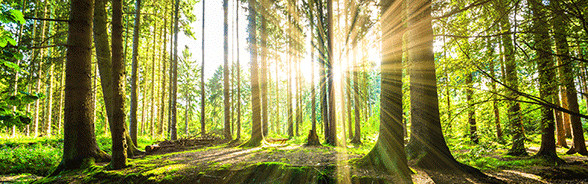
(hjb)  Forests composed of a mixture of tree species are preferable because, unlike pure stands, "neither insects nor storms can cause them major damage" wrote the German silviculturalist Heinrich Cotta. That was back in 1828. Looking ahead to the turbulent times augured by climate change, this old insight takes on a new relevance. "The ability of a forest to hold its own in changing conditions and to recover from perturbations depends on biodiversity on all levels," concludes a summary of worldwide experience in this field, published by the Convention on Biological Diversity.

Successful adaptation to climate change, along with long-term stability, are crucial characteristics to aim for, most notably in Switzerland's protective forests. To help preserve these, the FOEN's project on "Sustainability in protection forests" (NaiS) has developed good practice guidelines. Increasing the diversity of tree species is a core requirement, but can only be done in the course of forest regeneration. "We must utilise the potential of every locality to the full. That means more tree regeneration, in a way that exploits a site's potential to the full, bringing in any and every indigenous species that is capable of thriving there," says Arthur Sandri, head of the Landslides, Avalanches and Protection Forest Section at the FOEN. That is the best way to guarantee that the protective forest does its job today and, what is more, continues to grow for tomorrow in all the places where it is needed.


Contact: magazine@bafu.admin.ch
Last updated on: 18.05.2010

End Content Area

Full-text search

Further Information

Nachhaltigkeit und Erfolgskontrolle im Schutzwald - Wegleitung für Pflegemassnahmen in Wäldern mit Schutzfunktion. Ordner. 2005

Services

 PDF

06.09.2010 | 5599 kB | PDF

Contact


Federal Office for the Environment FOEN
info@bafu.admin.ch | Legal framework
http://www.bafu.admin.ch/dokumentation/umwelt/10342/10357/index.html?lang=en