

This version is for browsers with a low level of support for CSS.
Home Content Area
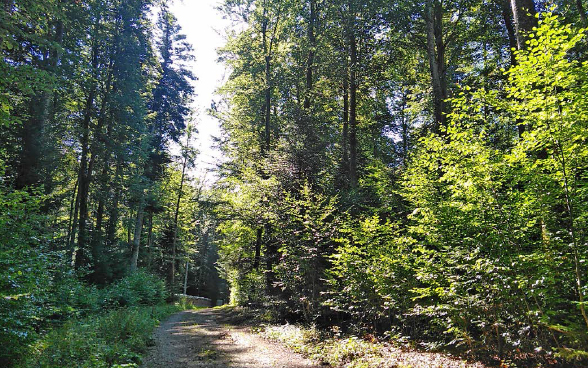
Recreational and leisure activities are becoming more and more important as a counterbalance to the pressure of modern lifestyles. The forest offers an ideal venue for such activities and, in Switzerland, its access is free and open to all. As a result, many people make frequent use of the recreation and leisure opportunities provided by the forest. Its visitors should, however, be careful not to disturb animals and plants in their habitats.
In Switzerland, everyone has the right to enter forests and pastures and to pick berries and mushrooms in volumes customary for the location. This right, which originates in Alemanic law, has been enshrined in the Swiss Civil Code (Art 699) since 1907. It applies to both private and publicly-owned forests and its scope is unique as compared with the rights accorded in neighbouring countries.
The importance of the forest as a recreational space for people is classified as one of the social functions of the forest (Federal Constitution of the Swiss Confederation of 1999). The Federal Act on Forests (ForA) places the social function of the forest on the same level as its protective and economic functions. The Federal Act on Forests also regulates pedestrian and vehicular access to the forest and the authorisation of the construction of buildings and other installations there. The cantonal forest legislations regulate additional issues such as the mandatory use of dog leashes, mushroom picking and the staging of major events in the forest.
There are a lot of actors and interest groups involved in the forest. Behaviour and attitudes to the forest and its use for the purpose of leisure are changing - both among forestry experts and leisure-seekers. Thus planning and participation in the related issues are particularly important.
The Working Group on Leisure and Recreation in the Forest (taf) is a network of experts working in the area of leisure and recreation in the forest. The group promotes the exchange of experience and information for the sustainable recreational use of the forest and organizes regular further training events.
End Content Area