

Basic monitoring network: water levels and discharge in surface waters
The FOEN Hydrology Division’s basic monitoring network now comprises some 230 gauging stations on surface waters. In addition to 26 lake water levels, river discharge is measured at 186 sites.
Systematic recording of the fundamental parameters of water levels and discharge dates back to the mid-nineteenth century. The long-standing measurement series provide a basis for a wide variety of applications, such as flood protection or investigation of the effects of climate change.
As the data is now rapidly accessible, it can be of great importance to decision makers under extraordinary conditions. In order to guarantee availability of the data, state-of-the-art technology is used for measurement and transmission and flood-proof constructions are maintained.
Basic monitoring network in surface waters
Discharge measuring methods
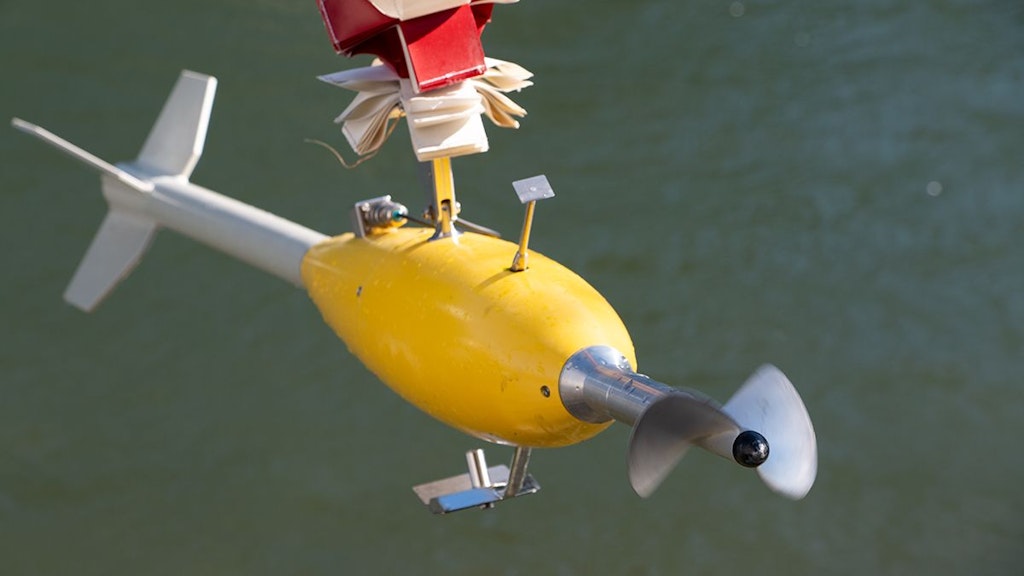
The discharge monitoring stations are calibrated through 5-6 discharge measurements each year. To ensure trouble-free operation, each station is checked by a local observer on a weekly basis.
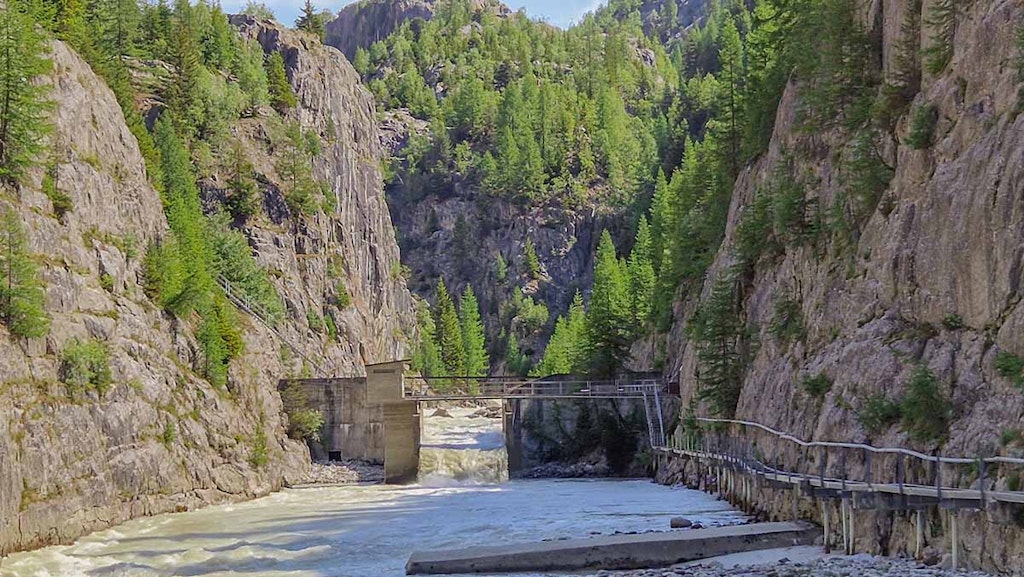
Index
The hydrology in Switzerland
Selected aspects and results
Handbuch der Pegelmessung. 1998. 77 S.
Hydrological measuring stations awarded by the WMO
The following FOEN hydrological measuring stations have been awarded as Centennial Observing Stations in 2023 and 2024.
- Thur-Andelfingen
- Birs-Münchenstein
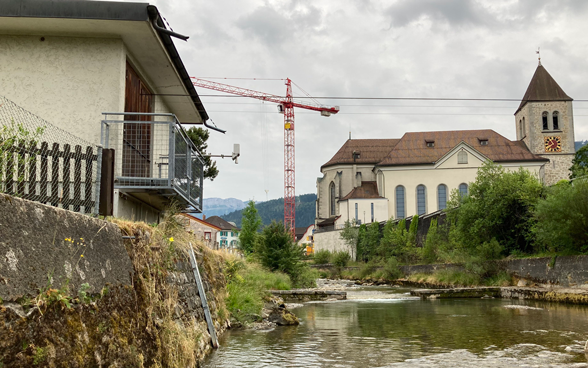
- Sitter-Appenzell
- Simme-Oberwil
- Gürbe-Belp
- Lütschine-Gsteig
- Bodensee (Untersee)-Berlingen
- Walensee-Murg
Hydrological measuring stations awarded by the WMO
Hydrological Study Areas in Switzerland (HUG)
Since 1957, the hydrology division of the FOEN has operated a network of hydrological study areas aimed at observing long-term changes in the water regime within Switzerland’s most natural catchment areas and reflecting the scope of its wide-ranging climatic regions.
Accordingly, it provides the natural runoff depths for around 40 catchment areas and calculates the monthly or annual areal precipitation for many of these areas, as well as the annual evaporation. In addition, it also offers catchment area statistics on morphometry, geology/hydrogeology, pedology and land use are also available.