

Environmental product information
There is a great deal of consumer interest in environmentally friendly products. However, the variety of labels makes it difficult to identify the really good products among the mass of goods touted as having green credentials. Transparent, standardised environmental product information can help.
In order to make resource-efficient decisions, consumers need reliable, relevant and comprehensive environmental information about the entire life cycle of products. This creates transparency in ecological terms. As part of the Green Economy Action Plan adopted by the Federal Council in 2013, the FOEN was therefore tasked with developing a method for improving environmental information on products. The FOEN is helping to improve the underlying data sources, for example by investing in the Ecoinvent database. In addition, it supports the continual development of impact assessment methods, which form the basis for generating environmental information. It also actively supports private initiatives on environmental product information when requested.
The federal government is not alone in its efforts to improve market transparency. With its ‘Single market for green products’ initiative, the EU is moving in the same direction as Switzerland. It has compiled comprehensive guidelines for providing basic environmental information on products; [1] category rules for 25 products will be drawn up and tested using these guidelines in a pilot phase running from 2013 to 2016.
Switzerland cannot go it alone in issuing binding regulations on product declarations. This is why the FOEN is participating in the EU pilot phase. As a member of the EU working groups for detergents, T-shirts, non-leather footwear and coffee, Switzerland is fully informed about the ongoing work, which defines simple and standardised methods for the ecological assessment of products and thus prevents misleading ecological product declarations – so-called ‘greenwashing’. The FOEN is also a member of the steering committee and the group of technical advisors. If you have an interest in this issue, you can register as a stakeholder via the EU website and find out about the progress of the project and public consultations.
Credible environmental communication
How can you make your environmental communication a success?
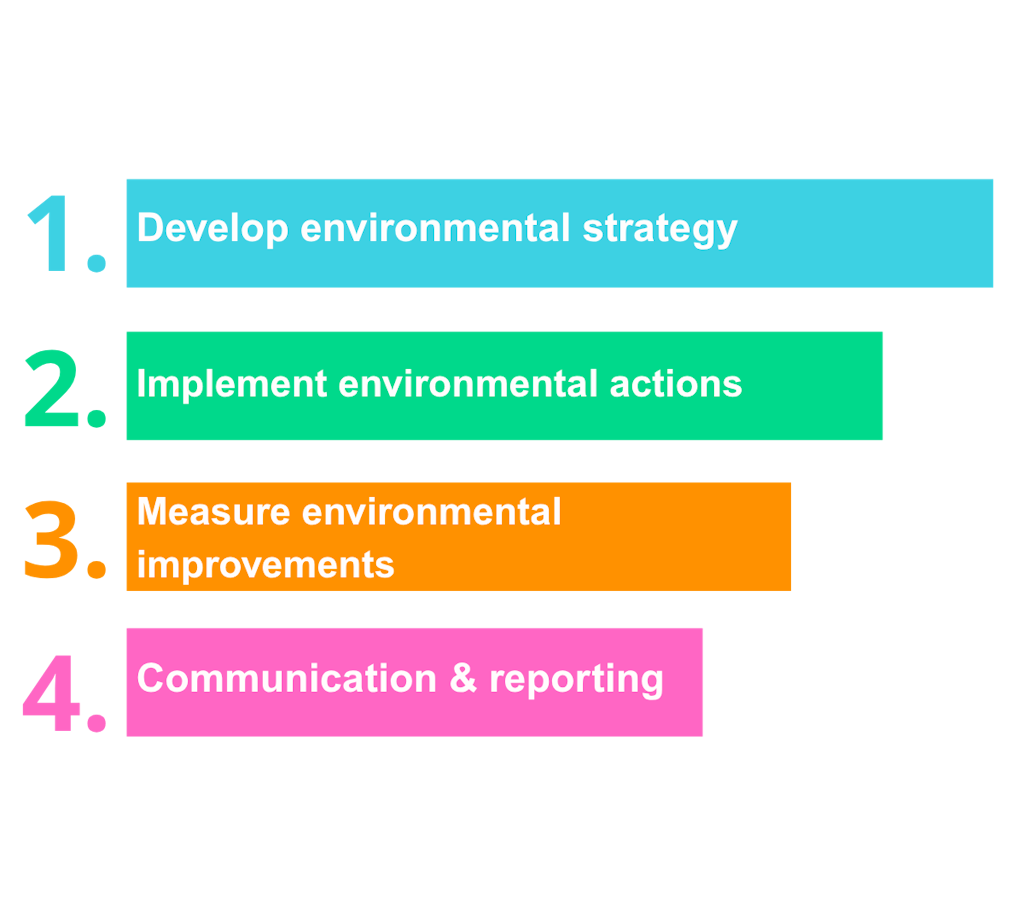
The foundation for credible environmental communication is a solid environmental strategy that sets out specific goals, actions and measurable improvements.
The following five principles will help your company to plan its environmental communication:
Relevance: Environmental actions should focus on the company’s biggest environmental impact across all environmental areas and fit with its core business.
Significance: Environmental actions should lead to demonstrable, significant environmental improvements, assessed across the entire product life cycle.
Balance: Communication should be realistic and present the overall picture, without exaggeration.
Transparency: Improvements, challenges and setbacks should be reported transparently, with clear context provided.
Verifiability: Environmental claims should be backed up by current, verifiable figures and data.
The following questions will help you to apply these principles:

We recommend communicating only environmental actions that are effective and verifiable. Talking about actions that are purely symbolic or required by law carries a high risk of greenwashing.
Successful communication increases customer trust, employee motivation and brand reputation. The Federal Office for the Environment (FOEN) provides a working tool that contains a step-by-step guide and recommends using a self-assessment test to evaluate your planned communication measures.
Important legal information: Since 2025, stricter requirements for verifiable climate information have been in force under the Unfair Competition Act (Art. 3 para. 1 let. x). An FOEN enforcement aid is expected to be published in late 2025.
Further information: See working tool.
Selbsteinschätzungstest - 5 Prinzipien glaubwürdiger Umweltkommunikation in der Praxis