

InfoTracer: Central coordination service for tracer tests
InfoTracer is the FOEN tool to coordinate, centralise and archive information on tracer tests performed in Swiss groundwater and surface water.
Tracer testing is one of the main techniques used in applied hydrogeology; it involves adding a labelling agent (tracer) to water which remains detectable even when heavily diluted. This allows water flow patterns in the subsurface and the exchange between groundwater and surface water to be traced. Tracers are also used to measure the amount of surface water discharge and to monitor infrastructure such as water and wastewater pipes.
InfoTracer – purpose
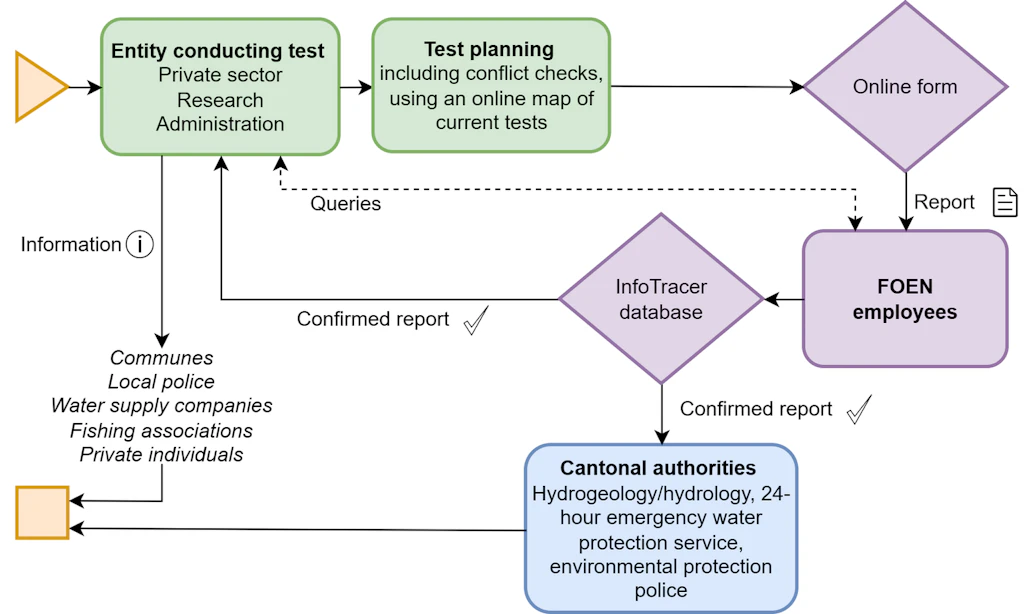
Tracer testing involves the deliberate introduction of artificial or natural substances into the water cycle. This must be done very carefully. The InfoTracer coordination centre makes available all information regarding the reported use of tracers. The impact of tracer tests can be minimised by:
- avoiding the overlapping use of tracers in the same region;
- ensuring the competent cantonal authorities are informed and that they can coordinate with the body conducting the tracer test if necessary;
- making the metadata on reported tests available centrally for later access;
- providing information on the correct use of tracers in groundwater and surface water.
InfoTracer is used for coordinating tracer tests; the results of the tests are not recorded.
The system works best when all those involved actively participate. No fee is charged for recording a tracer test.
Current and archived tracer tests
The map shows current tests (from the previous six months and the next six months), as well as all older tests archived in the InfoTracer database. It is designed to assist the relevant authorities in planning tests. The display of current tracer injections is intended to prevent overlaps between ongoing tests, and users can also find information on past tests. The map is updated daily.
Reporting tracer tests
Those responsible for the use of tracers (private consultancies, research institutes, authorities, etc.) are requested to report any tests to InfoTracer at least two weeks before they are conducted.
This concerns:
- Tracer tests in groundwater
- Discharge measurements in surface waters
- Testing of infrastructure
To avoid overlap with other tests, infrastructure monitoring carried out using tracer substances should also be reported. Fluorescent tracers should only be used in exceptional circumstances. Food colouring, beetroot juice or similar environmentally friendly dyes provide suitable alternatives that help to minimise interference with hydrogeological tracer tests.
Tracer tests can be reported using the online form:
- eGovernment Portal UVEK
-> InfoTracer - Markierversuche melden
Contact:
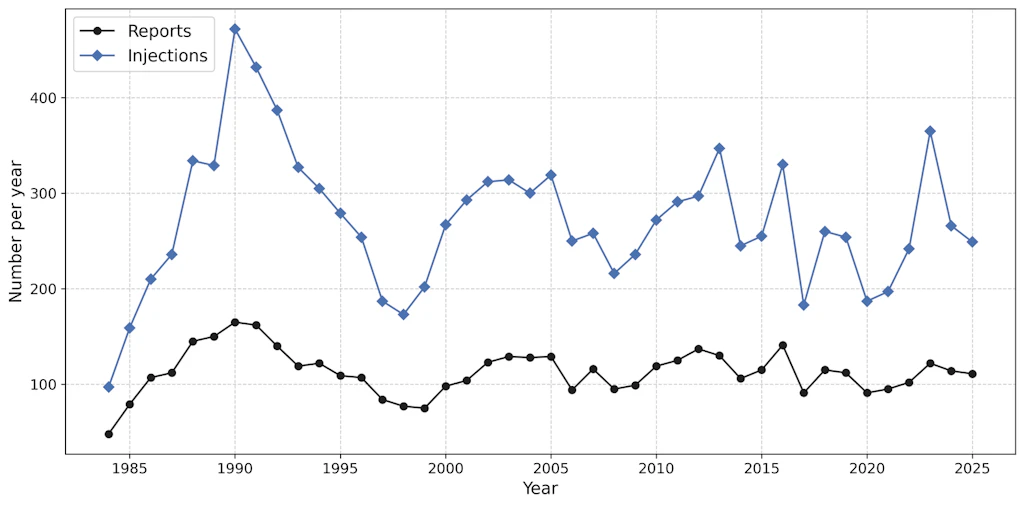
Overview of tracer tests and the tracer substances used
Since InfoTracer was launched in 1984, an average of around 110 tests have been reported per year, each involving two to three tracer injections. The three most commonly used tracers are uranine, eosin and naphthionate.
Further information
InfoTracer
Federal Office for the Environment FOEN
Hydrogeological Basics Section
InfoTracer