

Where are we today?
Switzerland has a comprehensive strategy for managing the risks posed by natural hazards, to which it is exposed as an alpine and densely populated country. To continue mitigating the risks posed by natural hazards in the future, an action plan was established in 2016, with measures to be implemented by 2040. On November 19, 2025, the Federal Council took note of the second report on the status of implementation of these measures.
Background
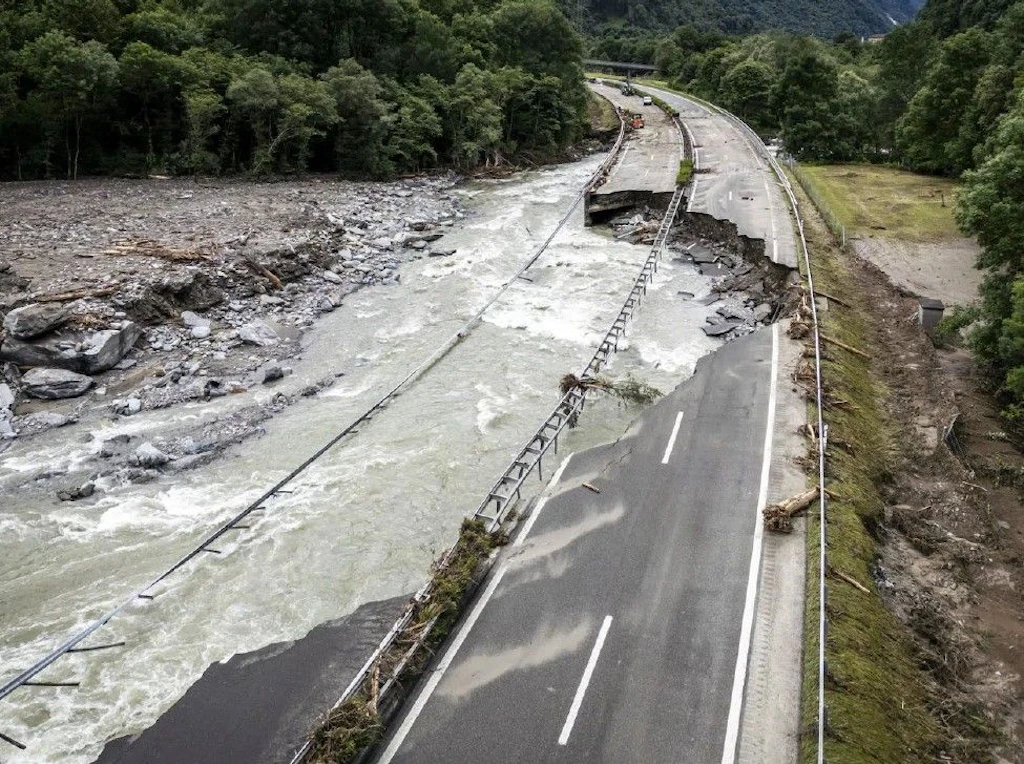
Natural hazards are and will remain a pressing issue in Switzerland. They become a risk when they threaten people, communities, and infrastructure. With its high density of settlements and infrastructure, Switzerland is particularly vulnerable to the risks posed by natural hazards. Rapid urbanization and infrastructure development, as well as climate change and the resulting increase in extreme weather events, further heighten the risk of injury and property damage.
The federal government, cantons, municipalities, and other partners therefore work together to protect against natural hazards. Since the 2000s, Integrated Risk Management (IRM) has been used for this purpose. This approach takes a holistic view of natural hazards in order to limit the increase in risks and reduce unacceptable risks to an acceptable level through a suitable combination of spatial planning, biological, technical, and organizational measures. In doing so, safety, economic efficiency, and sustainability are given equal consideration.
Based on Postulate 12.4271 by former National Council member Christophe Darbellay and the resulting mandate from the Federal Council and Parliament, the Federal Office for the Environment (FOEN) prepared the report “Managing Natural Hazards in Switzerland” and published it in 2016. This report analyzed the overall natural hazard situation and related activities in Switzerland. Taking the IRM into account, gaps in the management of natural hazards were identified and highlighted in the report. On this basis, 67 measures across five areas of action were defined, intended to significantly improve the situation. The report was adopted by the Federal Council on August 24, 2016, and the implementation of these improvement measures was commissioned to the respective federal offices and specialized agencies.
Current status
In 2020, the FOEN issued its first assessment of the implementation of the measures in the progress report “Managing Natural Hazards in Switzerland”. Four years after the initial assessment, the implementation rate of the measures stood at just over 25 percent. While a quarter of the measures had already been completed during this period, work had begun on developing various additional measures. In addition, several measures required legislative amendments for successful implementation, and the drafting process for these had already begun.
In 2025, the second progress report, “Managing Natural Hazards in Switzerland,” was published. It showed that the implementation of the measures had made significant progress in recent years and that the current implementation rate now stands at 69%. Already 29 of the 67 measures have been fully implemented (as of August 2025). In addition, further measures have also been implemented as part of subprojects.
A milestone in the implementation of the measures taken in recent years was the amendment of the Federal Act on Hydraulic Engineering (WBG), the Forest Act (WaG), the Hydraulic Engineering Ordinance (WBV), and the Forest Ordinance (WaV). These amendments were initiated in 2017 and unanimously adopted by Parliament on March 10, 2024. The revised laws and ordinances entered into force on August 1, 2025, and are intended to improve the legal framework for natural hazards involving gravity-driven forces, thereby better positioning the country to address future challenges.
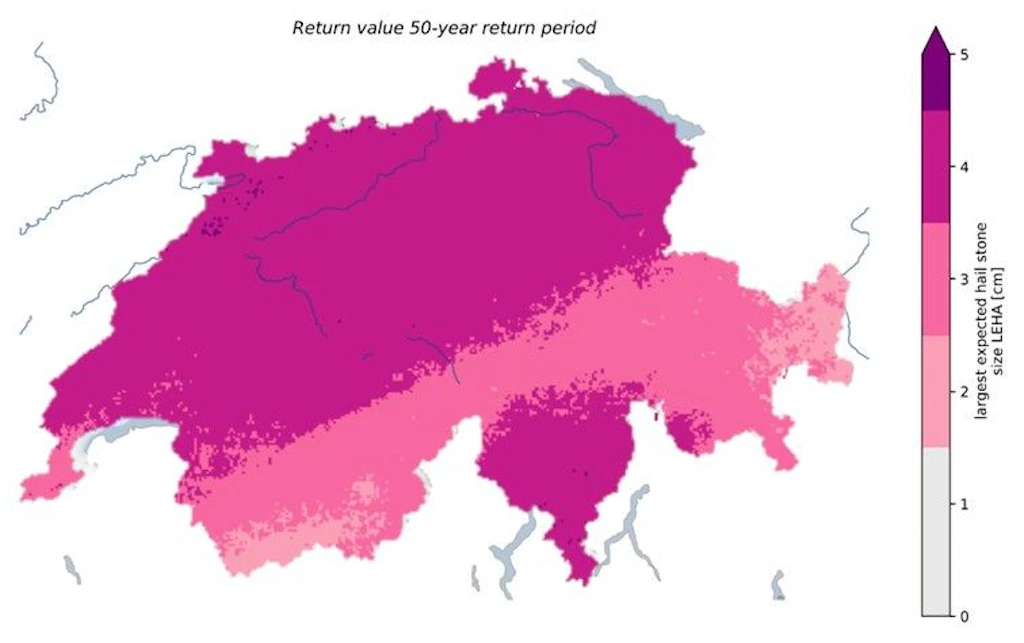
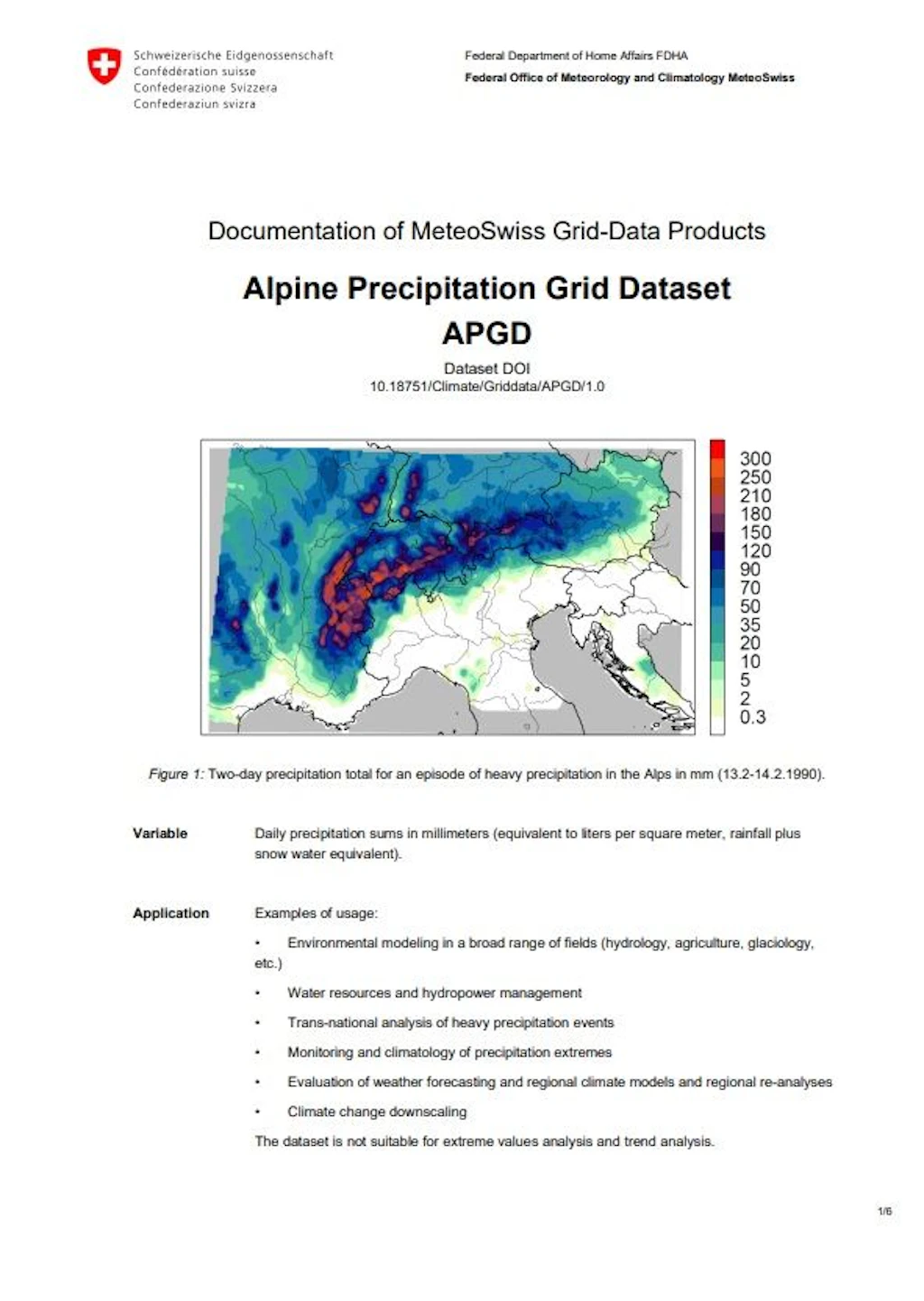
The latest progress report primarily describes measures on which progress has been made since the last progress report. These measures are primarily found in the action areas of “Hazard and Risk Assessment,” “Prevention,” and “Response and Recovery.” Below is a selection of measures that have been implemented since the last progress report (2020–2025).
Fields of Action
Index
Standards für kantonale Risikoübersichten (in German)
An important development in the field of prevention is that planning now takes account of risk levels as well as hazards. This applies both to action planning and to land-use planning. In some cases, changes to the law will be necessary. A new emergency response planning guide is now available.
The Swiss Society of Engineers and Architects (SIA) and the insurance companies are currently carrying out numerous activities relating to building practices for natural hazard mitigation. SIA standard 261/1 has been revised to take account of natural hazards and the new version has been published.
In the response and regeneration field, improvements are needed in relation to flood management and the coordination of federal subsidies made available in the event of a disaster. In the area of flood management, the main focus is on risk-based lake regulation and on improving hydrological forecasts.
In the field of risk communication, education and research the aim is to promote knowledge of a risk-based approach to dealing with natural hazards and to increase risk awareness. The target group consists of everyone who is affected or involved. Information and training on prevention and emergency response for natural hazards are being improved all the time. One measure designed to close the research gaps in the area of weather and climate risks has already been implemented by establishing a professorship in this field at ETH Zurich.
In the field of overarching plans and collaboration, measures are being implemented to ensure effective, efficient and coordinated implementation of the integrated risk management approach. Specifically, these involve overarching cantonal and national plans that identify a need for action based on basic hazard data and risk overviews. Minimum standards are currently being developed for comprehensive planning at cantonal level.
Changes to legislation are needed for the implementation of some measures. The Hydraulic Engineering Act will need to be partially revised and the Forest Act and Waters Protection Act will require adaptation. In terms of content, the aim is to enshrine integrated risk management in law, to remove disincentives through equal support for the various types of measures and to establish the cantons’ obligation to draw up risk overviews and comprehensive plans. The consultation took place in 2021.
The next progress report on the implementation of measures for integrated risk management of natural hazards is planned for 2025.