

Groundwater resources
Groundwater is present throughout Switzerland's subsurface. The quantity and temperature of the groundwater at a given site depends on the geology and the climatic conditions.
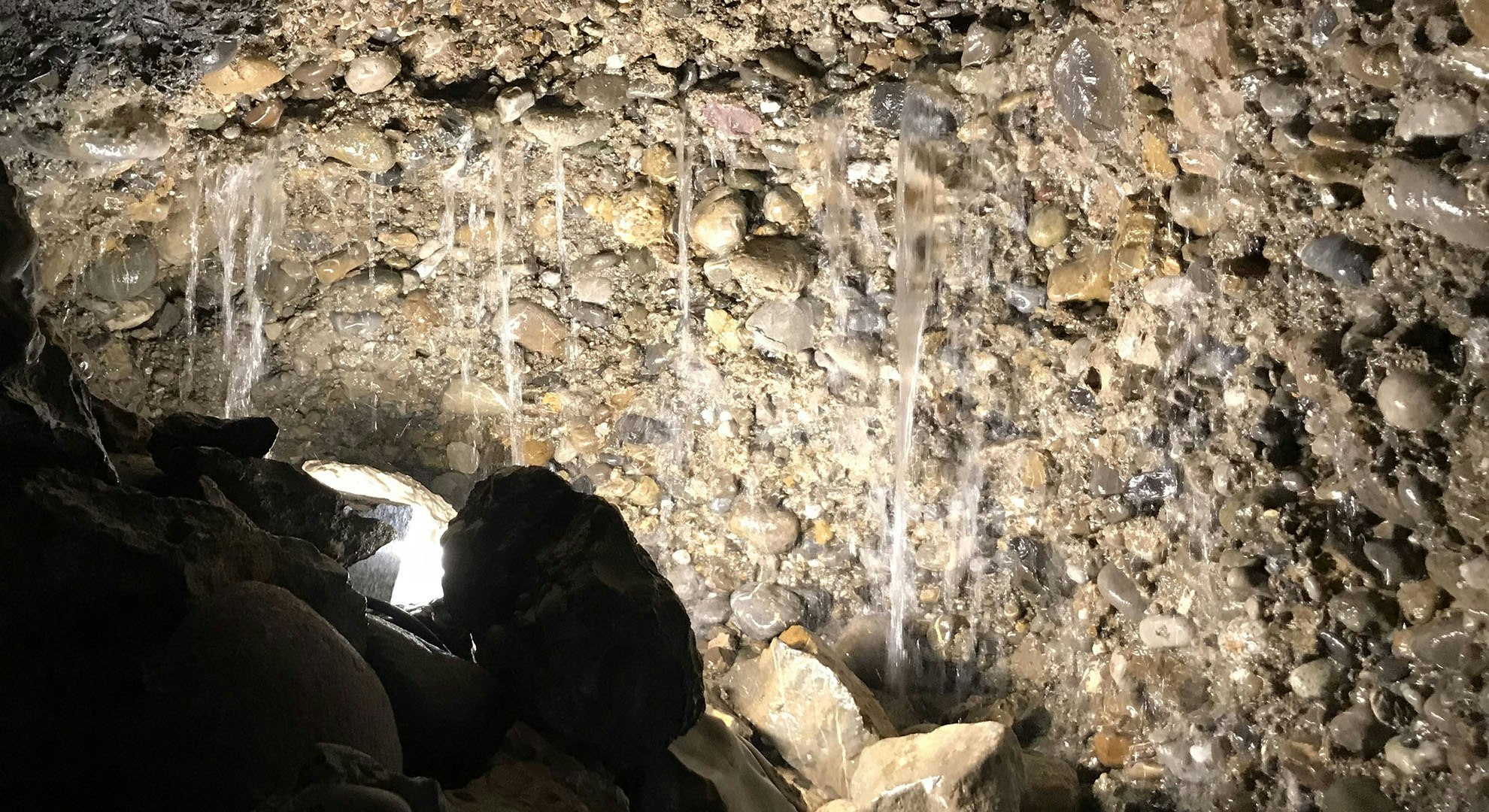
Groundwater levels and spring discharges
The quantity of groundwater in Switzerland fluctuates during the year, but is stable in the long term.
Drought and groundwater
Switzerland is rich in water, but climate change is changing this. Droughts not only affect vegetation and rivers, but also groundwater. The FOEN monitors the effects of drought on Switzerland's natural groundwater bodies and helps to develop sustainable strategies for managing these valuable resources.
Types of aquifers
Despite the country’s small size, there are many different types of aquifers in Switzerland. There are three main types: porous, fissured and karst aquifers. Their hydrogeological properties, such as storage capacity and permeability, depend on the properties of the rock.
Groundwater regimes
Groundwater levels and spring discharges usually display a recurring, annual pattern, i.e. a 'groundwater regime', just as rivers follow a 'flow regime'.
Stable water isotopes
The stable water isotopes deuterium and oxygen-18 are natural tracers in the water cycle that can be used to determine the origin of water components and to track climatic changes.
Groundwater temperature
To date, there has been no observable overall increase in groundwater temperature across Switzerland. In certain regions of the country, however, a slight rise in groundwater temperatures indicates the impact of climate change. For example, groundwater temperatures are rising by up to 0.06 °C per year in the Alpine region, in unconsolidated rock outside valley floors in the Central Plateau, and in the Jura. Direct human impacts on groundwater are also leading to measurable changes in groundwater temperature in densely populated areas.