

Phosphorrecycling
Phosphorus recycling to enable sustainable use of raw materials
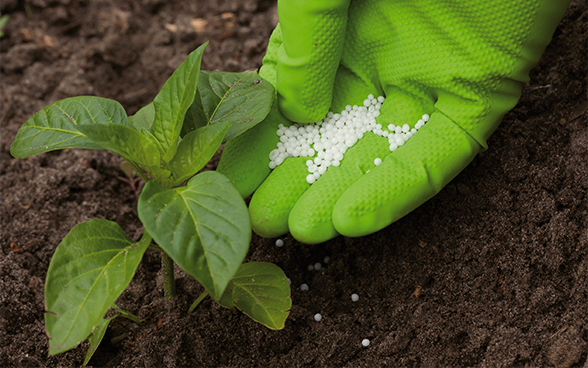
Phosphorus is a vital element which, along with nitrogen and potassium, is one of the most important components of the body's cells and bones. Human DNA – the carrier of genetic information – also contains phosphoric acid. Phosphorus fuels plant growth: one hectare of wheat requires 60kg of the nutrient each season, and all agricultural fertilisers have phosphorus as their main component. Large quantities of residues are produced at wastewater treatment plants and plants to treat waste from meat processing and the disposal of animal carcasses. Large amounts of phosphorus can be recovered from these residues. However, this nutrient is currently being lost from waste management systems. Until now, this nutrient has been lost in the process of waste management.
However, with the amendment of the Environmental Protection Act (EPA; SR 814.01) and the revision of the Waste Ordinance (ADWO; SR 814.600), phosphorus must now be recovered from sewage sludge, animal and bone meal and must be recycled, for example as fertiliser. Starting in 2026, phosphorus must be recovered from wastewater, sewage sludge or sewage sludge ash and recycled, for example as fertiliser. This will enable domestic agriculture to meet its requirements for this valuable mineral using local sources and without having to import mineral fertilisers from problematic sources or containing harmful heavy metals. Phosphorus recycling also closes an important material cycle and conserves primary phosphate reserves.
To create a stakeholder-inclusive process as a basis for participatory decision-making on phosphorus recycling in Switzerland, the Federal Office for the Environment (FOEN) began work on the SwissPhosphor platform in 2018.
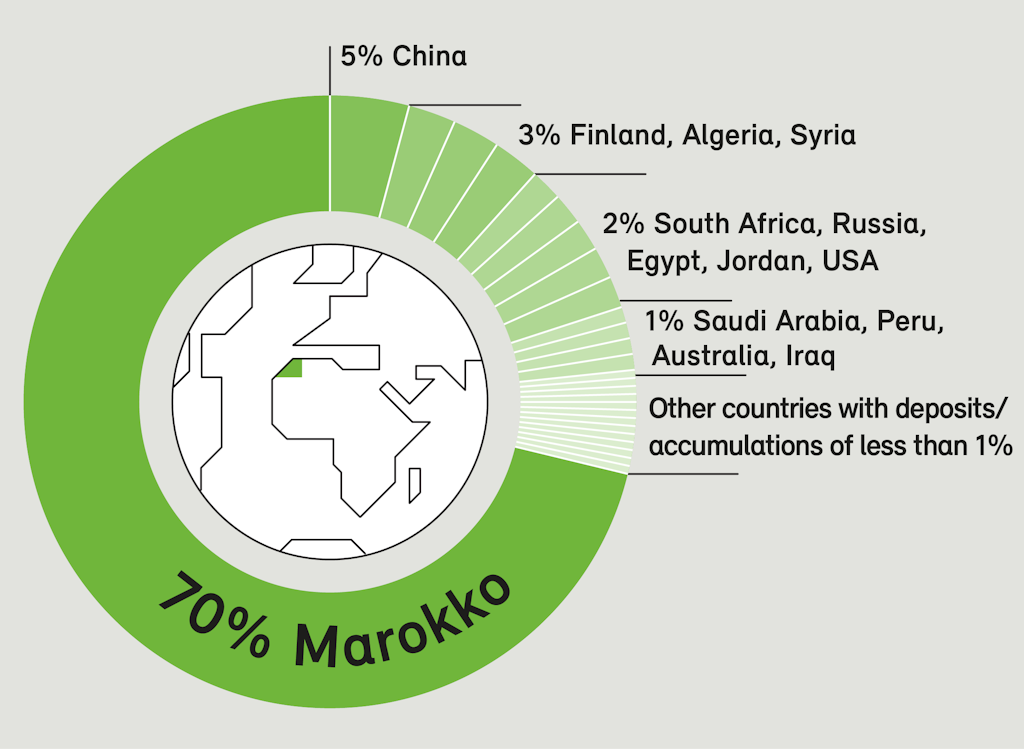
Global reserves of primary phosphorus
Phosphorus (P) occurs almost exclusively in nature in oxidised form as a phosphate (P2O5). Phosphate mining is the extraction of rocks containing phosphates (phosphate ores). Most of these phosphate ores are of sedimentary marine origin, but there are also lesser phosphate deposits in igneous rocks. Although sufficient phosphate ores are available in the medium term, the deposits are concentrated in a small number of countries (e.g. Morocco, China, Russia) and geopolitically unstable regions. In addition, depending on the location, phosphorus extraction can have a serious impact on people and the environment.
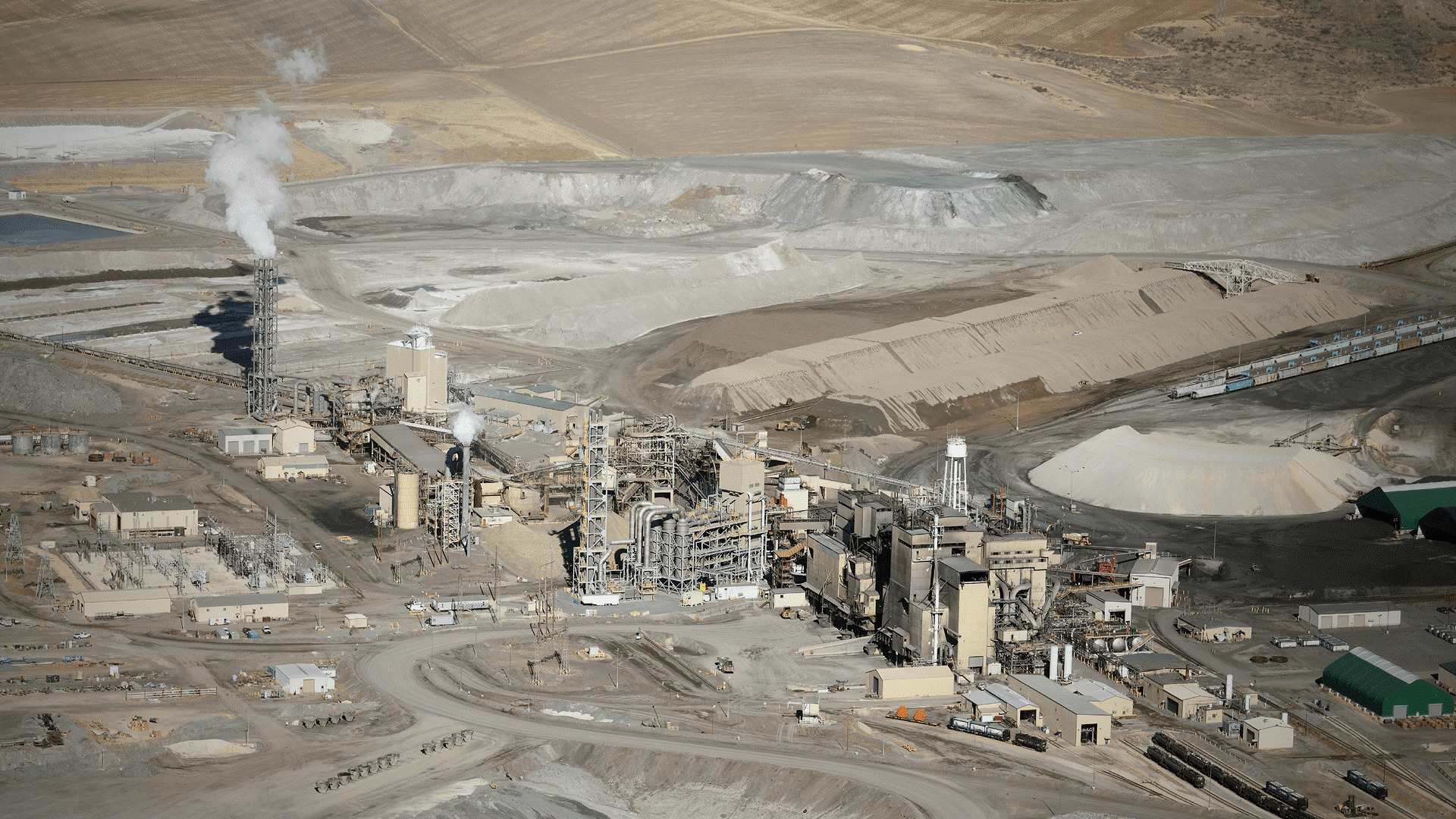
The record-breaking phosphate ore deposits in Norway, recently reported in the media, were discovered in 2018. The body of ore lies very deep, and its volume and the amount of usable material have not yet been fully assessed. It therefore remains to be seen if and when commercial mining will be possible.
Despite such discoveries, phosphorus remains a finite resource and should be conserved in the material cycle for as long as possible. The deposits found in Norway have no influence on Switzerland's commitment to recover phosphorus.
Phosphorus consumption in Switzerland
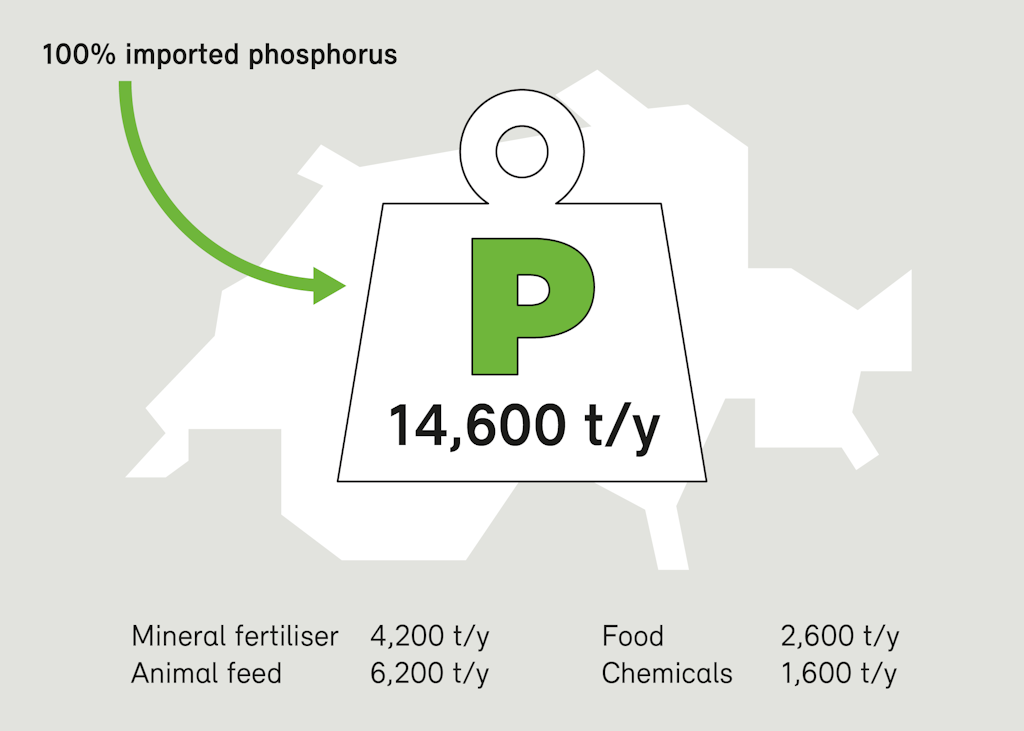
Switzerland's net phosphorus imports amount to 14,600 tonnes each year as mineral fertiliser (4,200 tonnes), in animal feed (6,200 tonnes), foodstuffs (2,600 tonnes) and chemicals (1,600 tonnes). As there are no primary phosphorus deposits in Switzerland, the country must import phosphorus from abroad in order to cover its current requirements, in particular the demand for phosphorus fertiliser. This overreliance is a cause for concern. The direct application of sludge containing phosphorus onto agricultural land has been banned since 2006. While this prevents pollutants from entering the soil, it also interrupts the cycle of phosphorus back into agriculture.
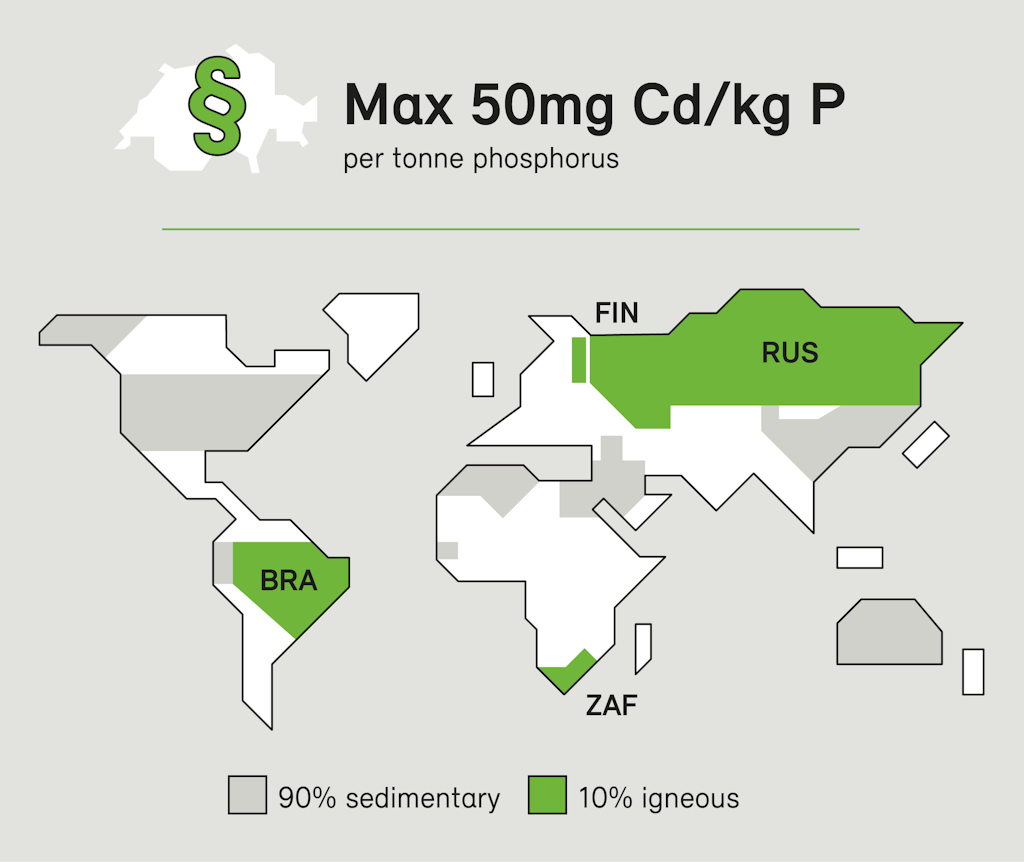
Strict cadmium limits exacerbate dependency on imports. Marine sedimentary phosphate deposits have a higher phosphate content than igneous ore deposits. However, the former also contain high levels of impurities, such as cadmium and uranium. Switzerland has very strict limits on the concentration of heavy metals in mineral fertilisers, so it relies mainly on igneous phosphate deposits with low cadmium content and can only source phosphorus for fertiliser production from certain mines. For this reason, Switzerland has until now imported much of its mineral phosphorus fertiliser from Russia. With the war in Ukraine this is no longer possible, which has again highlighted the issue of Switzerland's reliance on imports and the importance of an independent supply of phosphorus.
Phosphorus recovery – closing an important material cycle
Phosphorus is vital to life on earth. Plants, animals and humans need it to grow and produce energy. We have greatly exceeded the planetary boundary for the phosphorus cycle. Currently, the phosphorus cycle in Switzerland is not closed. In the past, sludge was used as a fertiliser in agriculture. Although this returned the phosphorus to the cycle, there are risks associated with the direct spreading of wastewater sludge as fertiliser. Owing in part to the BSE crisis (mad cow disease), there has been a ban in place since 2006 and the sludge must undergo thermal treatment through incineration. The phosphorus used in agriculture is currently mined from rocks in the form of phosphate, processed into a fertiliser and imported before it is applied to Swiss fields. In the fields, the nutrient is absorbed by plants, which in turn serve as food for humans and animals. The human body absorbs phosphorus as we consume animal and plant-based foods. The nutrient is then excreted and largely ends up in the waste water system. The sludge resulting from waste water treatment is incinerated and the phosphorus it contains ends up either as sludge ash or slag in landfills, or in cement plants, where sewage sludge and animal and bone meal are used as alternative fuels.
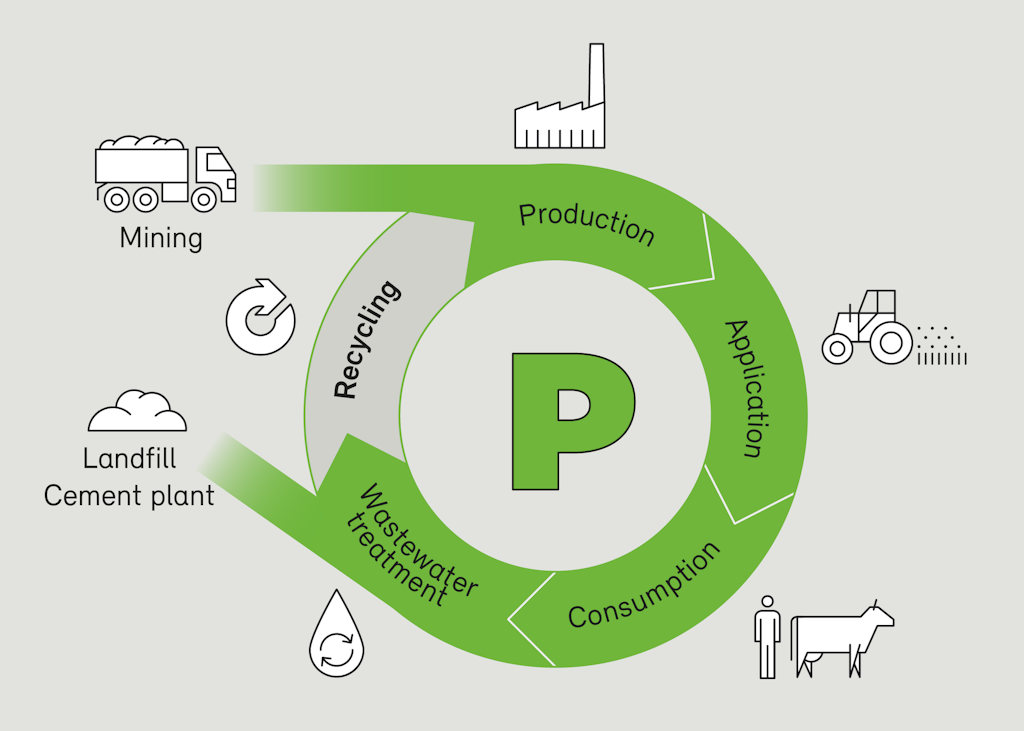
Successfully closing the phosphorus cycle will allow raw materials to be used efficiently and for as long as possible. The recycling and closed-loop management of phosphorus resources makes good environmental and economic sense because it helps conserve natural resources and reduces Switzerland's reliance on imports. That is why in 2016 the Federal Council made phosphorus recovery a requirement under Waste Ordinance. As part of the parliamentary initiative (Pa. lv. 20.433) to promote the circular economy in Switzerland, Parliament amended the Environmental Protection Act; the changes relating to the recovery of phosphorus came into force on 1 January 2025.
Legal basis for phosphorus recovery
The Federal Act on the Protection of the Environment (EPA; SR 814.01), the Federal Act on the Protection of Waters (WPA; SR 814.20) and the Ordinance on the Avoidance and Disposal of Waste (ADWO; SR 814.600) contain the main legal provisions for the environmentally sound management of waste in Switzerland. Article 30d (paragraph 2 letter c and paragraphs 4–6) EPA, in particular, governs the recovery of phosphorus.
The recycling of phosphorus from sewage sludge at central wastewater treatment plants, and from animal and bone meal, is mandatory unless it is used as animal feedstuffs or fertiliser. The recovered phosphorus is to be used to manufacture marketable products, such as fertilisers or phosphoric acid.
The Federal Council determines the proportion of phosphorus to be returned to the economic cycle, based on demand for mineral fertilisers. While partial recovery from sewage sludge is sufficient, all of the phosphorus in animal and bone meal must be recovered. Pollutants must be removed using state-of-the-art technology.
The Waste Ordinance was revised between 2024 and 2025, with the relevant stakeholders agreeing to the changes during the consultation process. The revised provisions create a binding framework that should enable the construction of two or three phosphorus recovery plants in Switzerland over the next few years.
The Federal Council has specified how this is to be implemented in the Waste Ordinance (Articles 15, 15a–15c and 51 ADWO). A minimum of 16 kilograms of phosphorus must be recovered for every tonne of dry matter in sewage sludge. These revised provisions also apply to imported sewage sludge and animal and bone meal. Suppliers of phosphorus-rich waste must provide the relevant cantonal authorities with evidence that the requirements are being met. Phosphorus recovery plants must operate at full capacity with immediate effect. If these requirements are met, sewage sludge may be recycled for material energy or energy recovery without phosphorous recovery. However, if these requirements cannot be met due to a lack of treatment capacity, the canton may approve recycling without phosphorus recovery.
The cantons must adapt their waste and sewage sludge disposal plans by 1 January 2028 and implement the reporting requirement from that date. Each year, they must report to the Federal Office for the Environment (FOEN) on the amount of phosphorus recovered and the amount of phosphorus-rich waste recycled without recovery.
29.10.2025
Chemikalien, Altlasten, Luftreinhaltung, Biotopschutz, Abfall: Bundesrat genehmigt Verordnungen

Phosphorus recovery options
Phosphorus recovery from sewage sludge, the ash resulting from the thermal treatment of sewage sludge, and animal and bone meal is a new branch of technology. In recent years, various technologies have been developed, tested and optimised in pilot projects and technical trials. The processes are based on different principles and have different starting points. In decentralised processes, phosphorus is extracted directly at wastewater treatment plants (WWTPs) from the wastewater and from sewage sludge streams. Centralised processes currently treat the sewage sludge ash after incineration and can take place at other locations independently of the wastewater treatment plants.
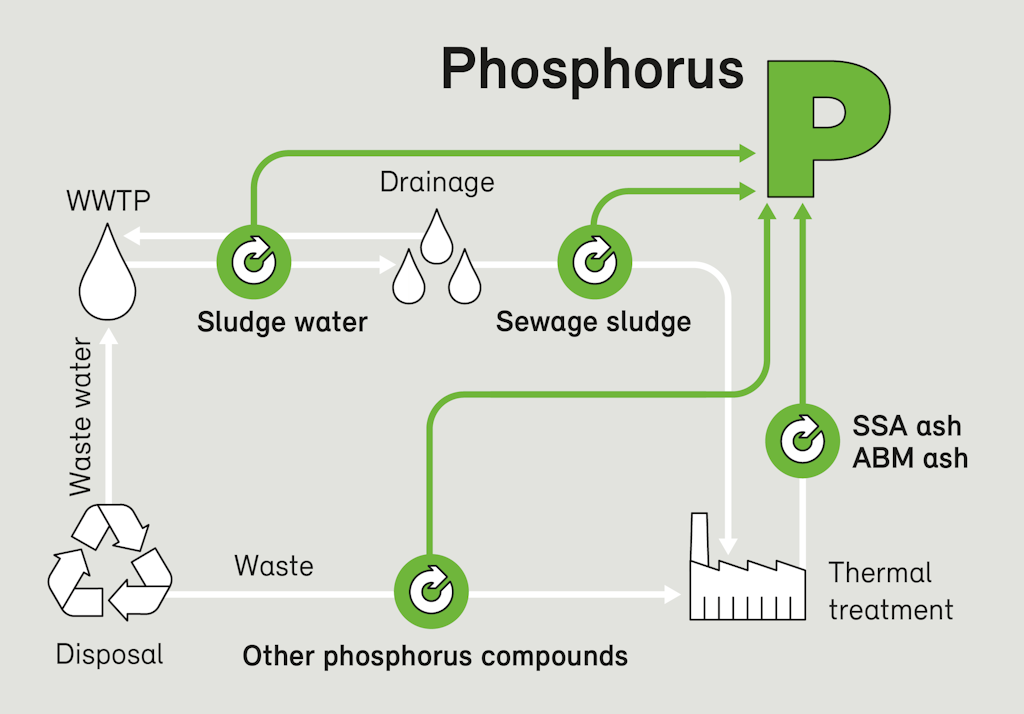
Current state of progress in recovery technologies
In recent years, the spectrum of sufficiently well-developed and feasible recovery processes has narrowed considerably to focus mainly on sludge ash-based processes. Wet chemical extraction or digestion using sewage sludge ash has become the preferred method. The advantages are a high recovery rate and compliance with the limits for heavy metals in phosphorus fertilisers. In Switzerland, there are currently projects in the pipeline for three processes: Phos4Life, REALphos and ZAB. Decentralised approaches are not expected to play a significant role in phosphorus recovery, partly due to low recovery rates. Wastewater treatment plants with well-functioning biological phosphorus recovery can achieve recovery rates of 50% at best.
Planned phosphorus recovery plants
Phos4Life (Emmenspitz, SO)
A large-scale plant based on the Phos4Life (P4L) process is planned on the waste management site operated by KEBAG/Solothurn-Emme wastewater association (ZASE) in Zuchwil (SO). Project partners are ZAR, ACR (TI), ERZ (ZH), Epura (VD), ERZO (AG), REAL (LU), Saidef (FR), SIG (GE) and ZASE (SO). The plant will use a wet-chemical process to extract high-quality technical-grade phosphoric acid from sewage sludge ash. This can then be marketed directly to the chemical/technical industry in Switzerland and throughout Europe. The technical-grade phosphoric acid can also be used to produce low-pollutant fertilisers such as TSP46 in Switzerland. At the current stage of the project, it is estimated that the P4L plant will be able to recover around 2,200 tonnes of phosphorus per year. Construction is scheduled to start in mid-2027 and the plant will be operational in 2030.
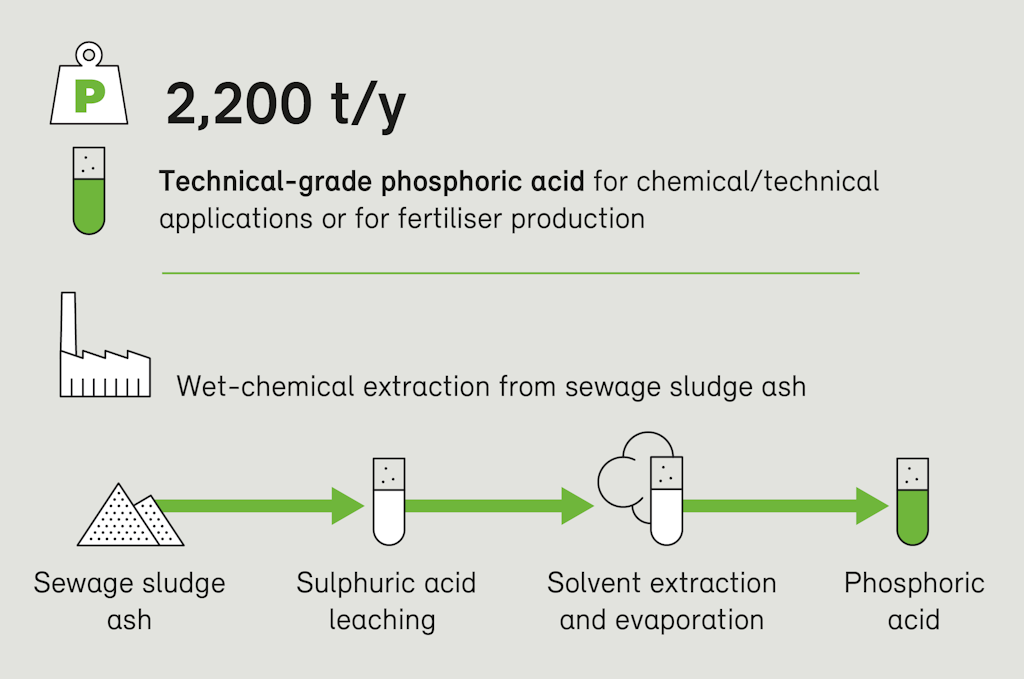
Phosphor26 (Oftringen, AG)
As part of the Phosphor26 project, a sewage sludge drying plant and a large-scale plant based on the REALphos process are planned in partnership with Holcim at the site of the Zofingen waste disposal facility (erzo; Entsorgung Region Zofingen) in Oftringen (AG). The partners on this project are erzo (AG), REAL (LU), and Holcim. The REALphos or leaching process employs wet chemical extraction to produce phosphoric acid for fertiliser using sewage sludge ash. The resulting phosphoric acid will then be sent to ZAB Bazenheid for further processing into fertiliser. Projections at this stage of the project suggest that the plant will be able to recover 1,300 tonnes of phosphorus per year. Once investment is secured, construction will start and the plant should be operational in about 3.5 years.
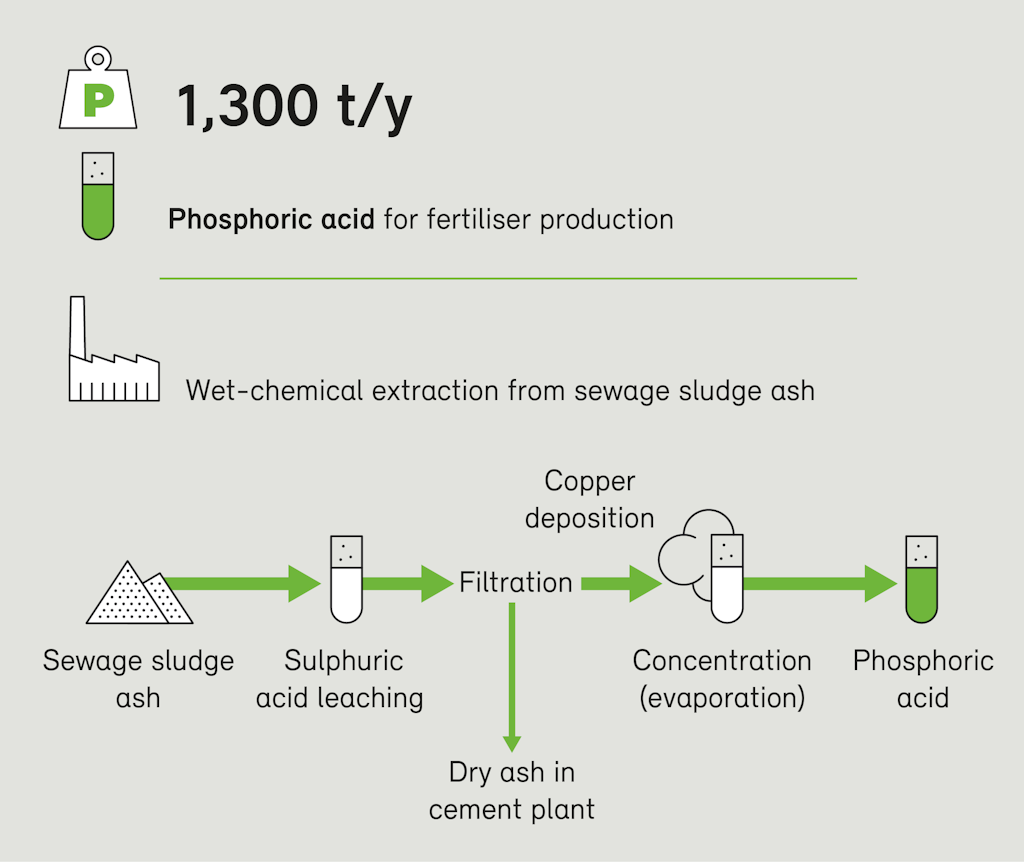
ZAB (Bazenheid, SG)
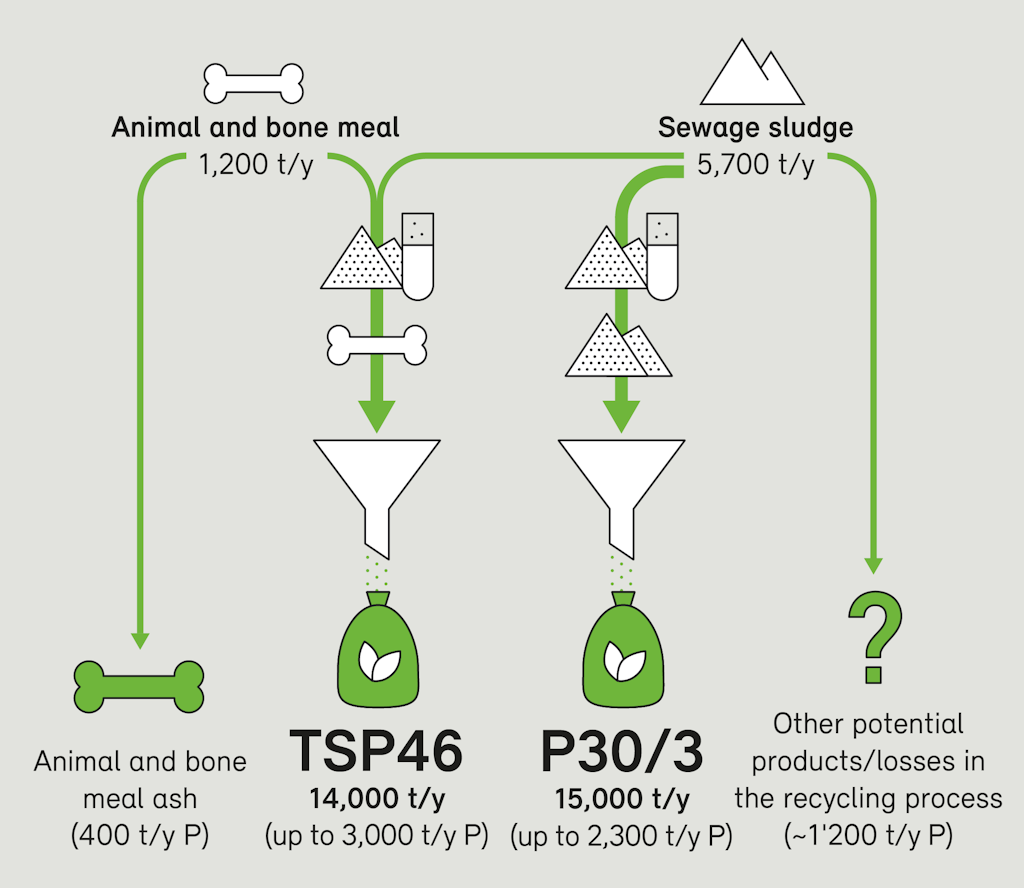
The Bazenheid (ZAB) waste management association is developing a large plant to implement its phosphorus recovery process at its site in Bazenheid (SG). The project partners are the wastewater interest group Klärschlamm-Interessengemeinschaft Ost (KIGO), wastewater association Altenrhein (AVA), Landi Aachtal (fruit growers' agricultural association Oberaach TG, OGO), ZAB and the TMF Extraktionswerk Ltd. The enterprise will take the form of a public limited company, 'P-AG Bazenheid'. The plant is designed to produce P30, P38 or TSP46 fertiliser through wet-chemical digestion of sewage sludge, animal and bone meal ash using phosphoric acid. The TSP46 (triple superphosphate fertiliser containing 46% phosphate) will be sold in Switzerland as a fertiliser or for processing into a mixed fertiliser. P4L's technical-grade phosphoric acid is suitable for the production of TSP46. Fertilisers containing 30% or 38% phosphate (P30, P38) are intended for export. However, they can also be used in Swiss agriculture. REALphos phosphoric acid for fertiliser can be used for the production of P30 and P38 fertiliser. According to the project information, the plant should produce 14,000 tonnes of TSP46 fertiliser containing 3,000 tonnes of phosphorus and 15,000 tonnes of P30/38 fertiliser containing 2,300 tonnes of phosphorus annually. Construction will start in spring 2025 with a view to launching operations in summer 2026.
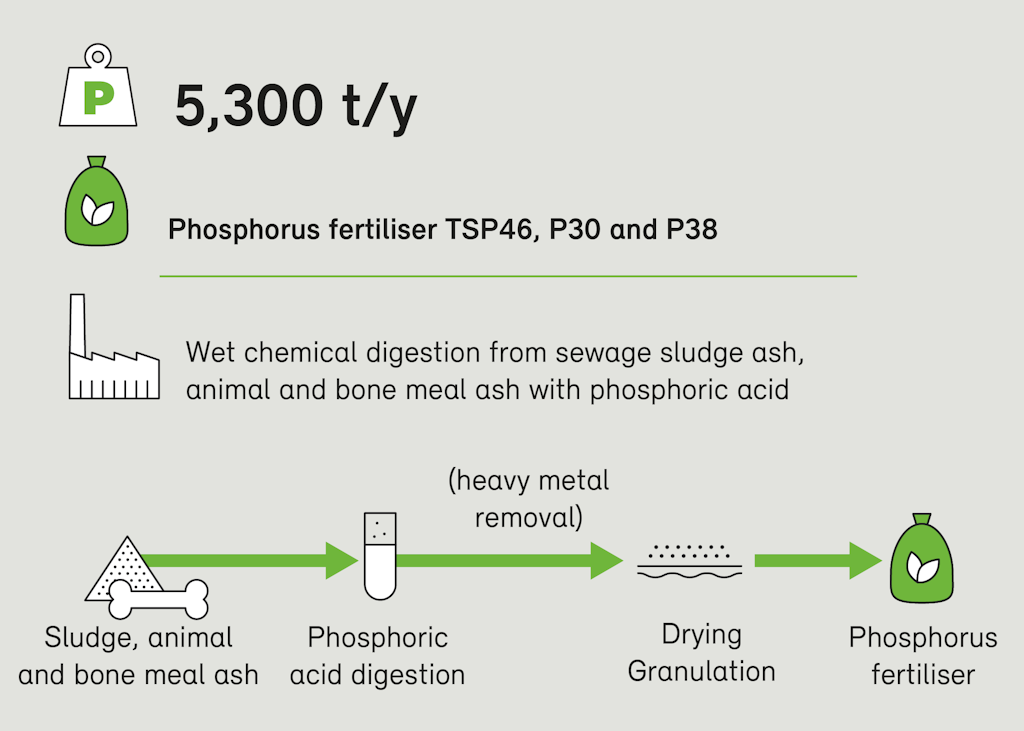
Products and market
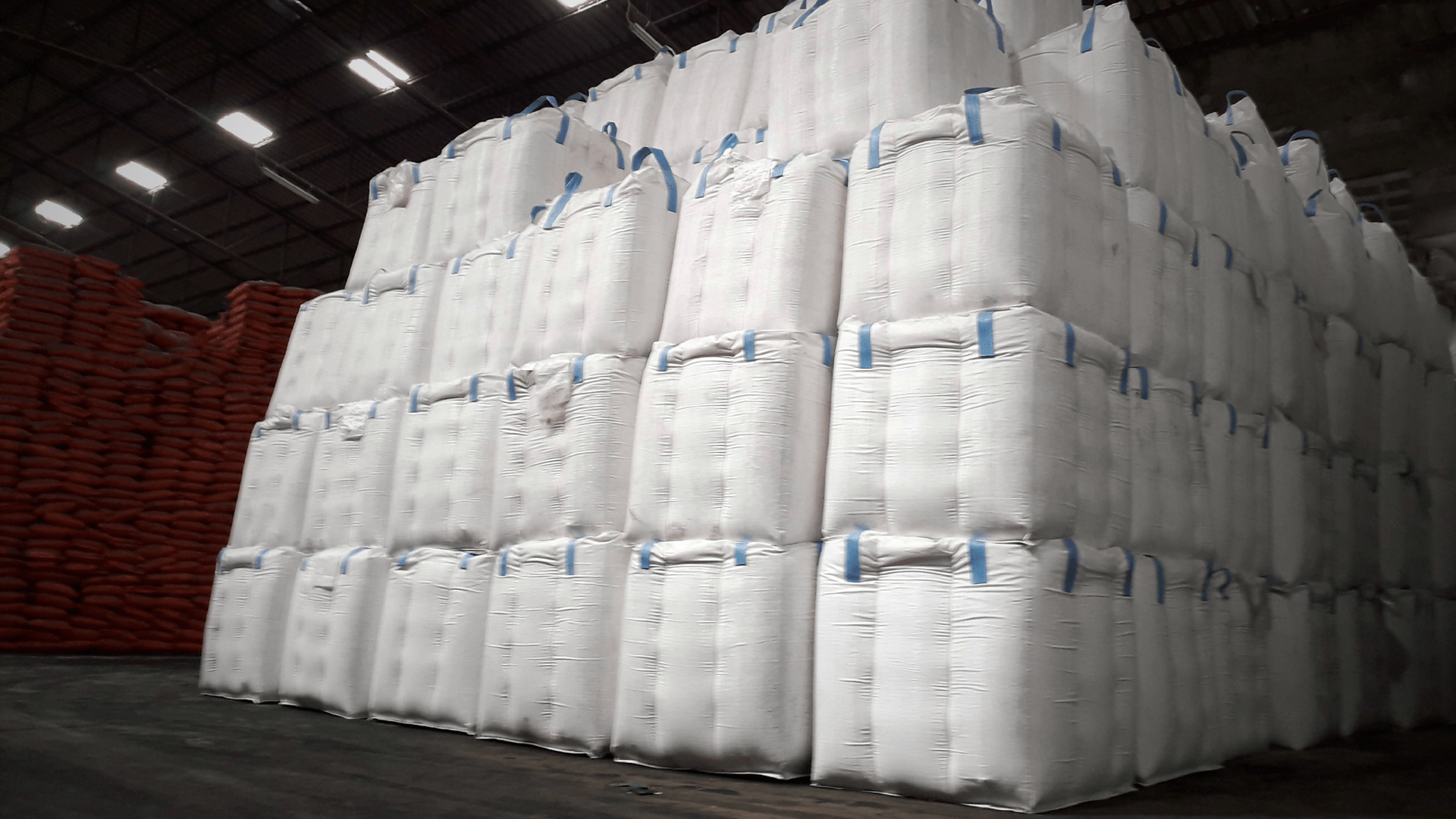
Various grades of phosphoric acid and P30, P38 or TSP46 fertilisers are the main products that can be made from recovered phosphorus. Technical-grade phosphoric acid can be used in the chemical/technical industry or for the production of TSP46 fertiliser. Fertiliser-grade phosphoric acid is intended for the production of P30 or P38 fertiliser. All the fertilisers mentioned (P30, P38, TSP46) meet the legal requirements and may be used in Swiss agriculture. P30 and P38 fertilisers do not meet current Swiss fertiliser industry requirements, which is why these fertilisers are currently intended for export. TSP46 fertiliser meets the Swiss fertiliser industry requirements and will be sold on the Swiss market. The three planned projects Phos4Life, Phosphor26 and ZAB have the capacity to recover phosphorus from large quantities of sewage sludge ash. However, these three projects will not allow Switzerland to exploit the full potential of sewage sludge as a source of phosphorus. There is an overlap of stakeholder interests and in many cantons, it is not yet clear how and where phosphorus recovery will take place.
Funding
The costs of developing, building and operating phosphorus recovery plants are expected to exceed the revenue generated from selling products made from recycled phosphorus. Depending on the process, these additional costs amount to around CHF 5 per person per year. According to Article 30d (paragraph 5) of the amended Environmental Protection Act, these operating and capital costs are to be borne by those responsible for generating sewage sludge.
In practice, the additional costs are financed through wastewater charges based on the legal framework set out in the Water Protection Ordinance (WPO; SR 814.201). This ensures that the costs are shared by those who generate wastewater. It also builds on established enforcement processes and can be implemented immediately. The necessary surcharges on wastewater fees are expected to be in the single-digit percentage range, which is significantly lower than existing differences in fees between various wastewater treatment plants and communes.
Current developments in other countries
In Germany, the Sewage Sludge Ordinance (AbfKlärV), which came into force in 2017, requires sewage treatment plants with a capacity of at least 100,000 population equivalents to recover phosphorus from sewage sludge from 2029 and smaller plants from 2032. The use of sludge from the wastewater treatment plants is prohibited in agriculture or horticulture, however. With the entry into force of the EU Fertiliser Products Regulation in 2022, the provisions are now in place to allow phosphorus fertilisers from sewage sludge ash and digested sludge to be sold on the European market.
Austria's recently passed Waste Incineration Ordinance 2024 (AVV 2024, BGBl.II No 118/2024, § 20) makes it the third European country to commit to phosphorus recovery from 1 January 2033. From this date, sewage treatment plants with a capacity of 20,000 population equivalents are required to incinerate sewage sludge and to recover at least 80 per cent of the phosphorus in the resulting ash or to use the entire amount of incineration ash for the production of fertiliser that complies with Austrian fertiliser regulations. In cases where phosphorous is recovered directly at the wastewater treatment plant, at least 60 per cent of the phosphorous in the water entering the plant must be recovered.
Index
SwissPhosphor
FAQs on phosphorus recycling
The amended Waste Ordinance no longer sets a deadline for phosphorus recovery. Once a phosphorus recovery plant is operational, it must run at full capacity until the required quota is met, i.e. until 16kg of phosphorus per tonne of sewage sludge dry matter has been recovered, or until phosphorus has been completely recovered from animal and bone meal. For sewage sludge, this quota corresponds to treating approximately 60% of sewage sludge in Switzerland. The rest can continue to be used as fuel.