

Chlorothalonil in groundwater
Metabolites of the fungicide chlorothalonil pollute the groundwater in large areas. Concentrations above 0.1 micrograms per litre are present in more than half of the cantons. The Swiss Plateau, which is used intensively for agriculture, is the most affected region.
Chlorothalonil, an active substance in plant protection products, has been used in Swiss agriculture since the 1970s. After the Federal Food Safety Veterinary Office FSVO reassessed this substance with regard to its potential health risk, attention has focused on chlorothalonil metabolites in drinking water. In Switzerland, 80% of drinking water is extracted from groundwater.
Metabolites of the pesticide chlorothalonil were detected in groundwater for the first time in 2017 during a pilot study of the NAQUA National Groundwater Monitoring, which is operated by the FOEN in close cooperation with the cantonal authorities. In 2018, the analyses were expanded to include additional monitoring sites. A national data set from the NAQUA monitoring sites is available for the chlorothalonil metabolite R417888 since 2019, and for the chlorothalonil metabolite R471811 since 2020.
More than one in four monitoring sites are affected
Seven chlorothalonil metabolites have been detected in concentrations exceeding 0.1 μg/l in groundwater: chlorothalonil R471811, R417888, R419492, R611968, SYN 507900, SYN 548008 and SYN 548580. . In particular, the two metabolites R471811 and R417888 pollute the groundwater in many agricultural areas of the Swiss Plateau. Values of over 0.1 μg/l have been detected in the cantons of Aargau, Basel, Bern, Fribourg, Grisons, Jura, Lucerne, Neuchâtel, St. Gallen, Schaffhausen, Solothurn, Thurgau, Ticino, Vaud, Valais, Zug and Zurich.
Ground water is especially affected by the metabolite chlorothalonil R471811, which exceeds 0.1 μg/l at more than 50% of the monitoring sites located in the Swiss Plateau. Across the whole country, more than one in four monitoring sites are affected.
The metabolite chlorothalonil R417888 exceeds 0.1 μg/l in groundwater of the Swiss Plateau at approximately 10% of the monitoring sites.
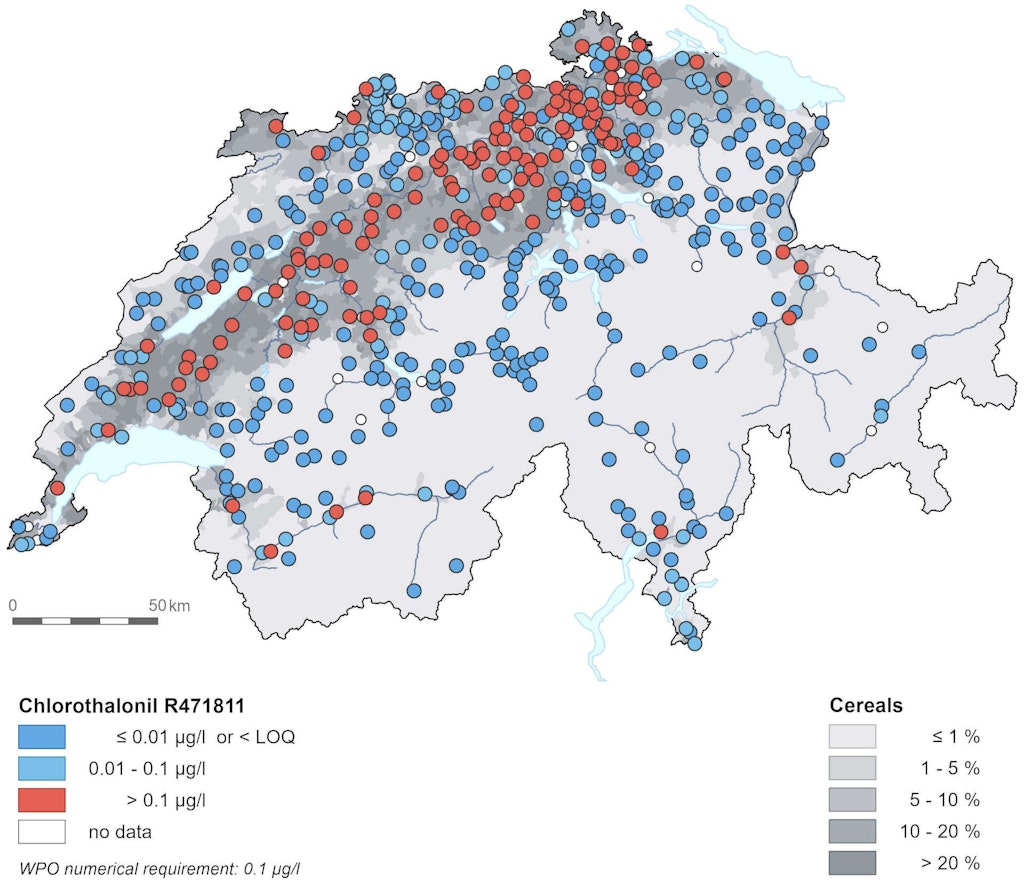
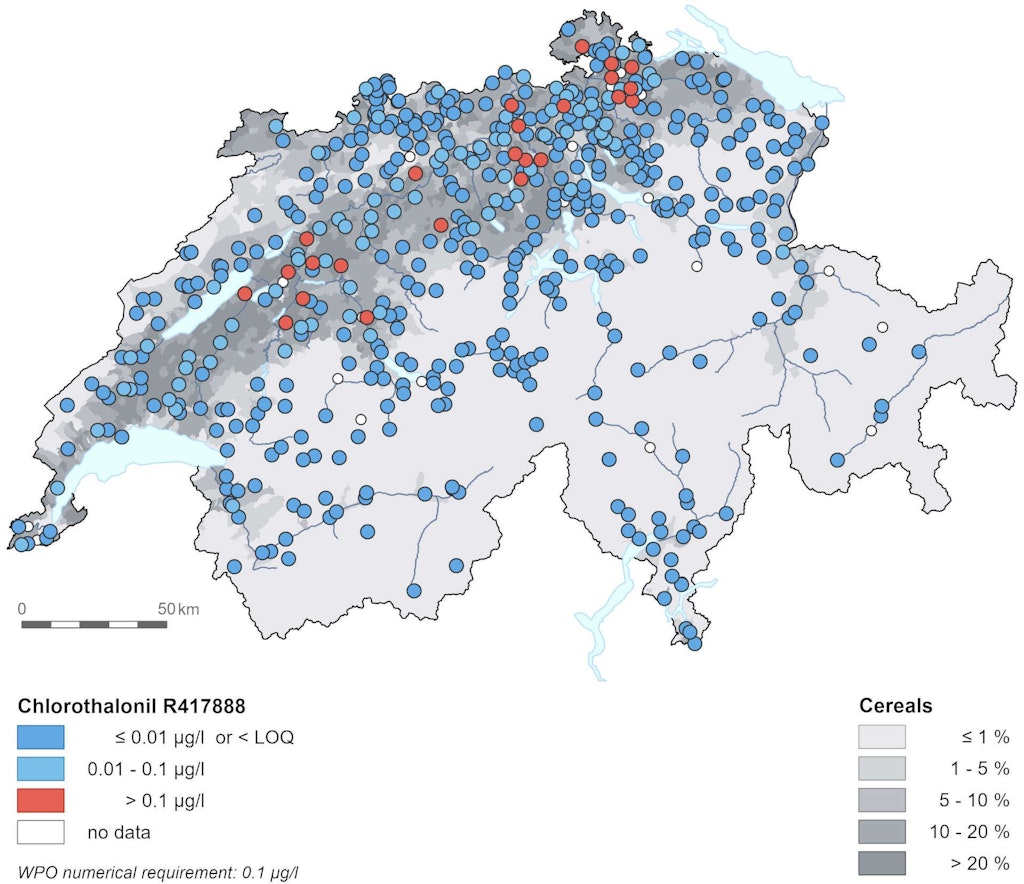
Chlorothalonil has been banned since 2020. As the natural renewal of groundwater takes a relatively long time and the chlorothalonil metabolites are very persistent, it can be assumed that these contaminants will significantly impair groundwater for many years.
Groundwater quality on site
All data gathered as part of the NAQUA National Groundwater Monitoring are made available to the cantonal authorities. The water suppliers concerned are also informed about the results. The cantonal authorities are responsible for providing detailed information on groundwater quality of a specific region or location. The water suppliers inform their customers about the quality of the local drinking water.